The Amsterdam Club That Chose Cricket Over Continental Football Dominance

Cricket arrived in the Netherlands long before football ever got a foothold in the country. As referenced in Roy Morgan’s Encyclopedia of World Cricket an English traveller recorded the game being played near Scheveningen in the 1780s, though it took until 1857 for the country's first proper cricket club to be formed at the elite boarding school - Instituut Noorthey. By the time football showed up decades later, Dutch cricket already had its clubs, its grounds and its own quiet sense of seniority.
With the ongoing FIFA World Cup capturing the sporting world’s imagination, the Netherlands, as ever, are very much a part of it. Dutch football has spent a century being treated as serious contenders on the world stage. It is a curious thing, then, to discover that the club responsible for the country's very first football championship eventually looked at all that success and walked away from the sport entirely, in a completely different direction – towards cricket.
RAP won the Netherlands Football League Championship five times, all in the 19th century, including three titles in a row between 1897 and 1899, the last of those unbeaten. They also became the first cup champions of the Netherlands in the 1898 to 1899 season.
Then, in 1900, RAP did something that still sounds implausible. According to the football history archive RSSSF, RAP travelled to Brussels for what local newspapers dubbed the club championship of the continent, beating teams from Belgium, Switzerland and the Netherlands on three successive days to win the first edition of the Coupe Van der Straeten Ponthoz. Some historians count that as the first ever continental European club championship, contested only by a Viennese cricket and football club with a claim of its own. Either way, a team born out of a cricket dressing room had just become, by most reasonable readings, the best football side on the continent.
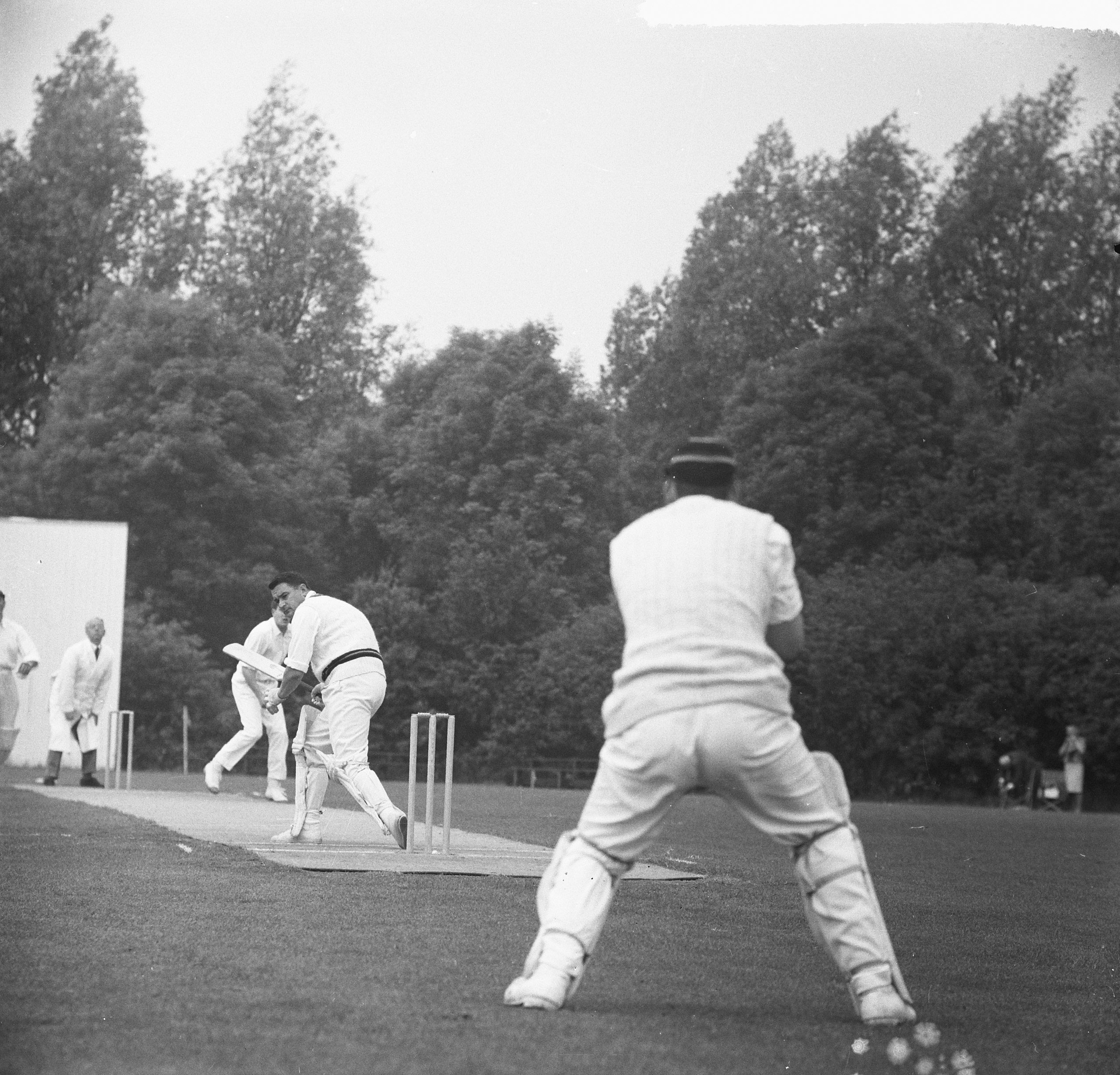
It did not last though. Fortunes changed after the turn of the century, and the club merged with local rivals Volharding in 1914 to form a new combined entity. The following year Amstels joined too, the club was renamed VRA, and despite the larger pool of players the football continued to struggle. By 1917, VRA had stopped playing football altogether and continued purely as a cricket club, the sport it had started out playing before football ever entered the picture.
VRA never looked back. In 1939 the club moved to its current home in the Amsterdamse Bos, a ground that has since grown into an approximate 14,500 capacity venue and one of the few in mainland Europe with a proper grass wicket. A pitch laid there in 1994 was considered a daring experiment at the time, given the long-held belief that a good grass wicket was simply impossible to maintain on Dutch soil, but it worked well enough to earn the ground international fame as the one with the tree. It went on to host a World Cup fixture too in 1999 and the Videocon Cup in 2004, featuring Australia, India and Pakistan in front of more than 25,000 spectators. In 2006, the ground saw Sri Lanka post what was then a world record one day international total of 443 for 9. VRA remains one of the principal venues for Dutch international cricket. The Netherlands national team has hosted major cricket nations there, including England, Australia, India, Pakistan and South Africa."
Somewhere in the corner of a clubhouse in Amstelveen, the trophies from RAP's improbable 1900 European adventure presumably still sit, claimed today by a small amateur football club in Amstelveen that took up the name once VRA gave it up for good. Dutch football has the Eredivisie, Ajax, and a World Cup final appearance to its name. It is worth remembering that one of its founding institutions took the path towards cricket via mergers, dissolutions, and shifting sporting structures and never reconsidered.
The European T20 Premier League (ETPL) now arrives on the continent where this whole loop played out.